languages languagesicone
site loader
site loader
May 15, 2026 Opinion: Africa Is Fuelling a Billion-Dollar Music Industry — So Why Are African Artists Still Getting Paid Pennies?

Opinion: Africa Is Fuelling a Billion-Dollar Music Industry — So Why Are African Artists Still Getting Paid Pennies?

Opinion: Africa Is Fuelling a Billion-Dollar Music Industry — So Why Are African Artists Still Getting Paid Pennies?

Let’s stop celebrating the illusion.

African music is not “rising.” It has already taken over.
From Accra to Lagos, from London to New York, African sound is everywhere — streaming, clubs, festivals, commercials.

But here’s the part nobody wants to confront:

African music is making billions globally — yet African artists are still being paid like they are local acts.

That is not growth.
That is extraction.

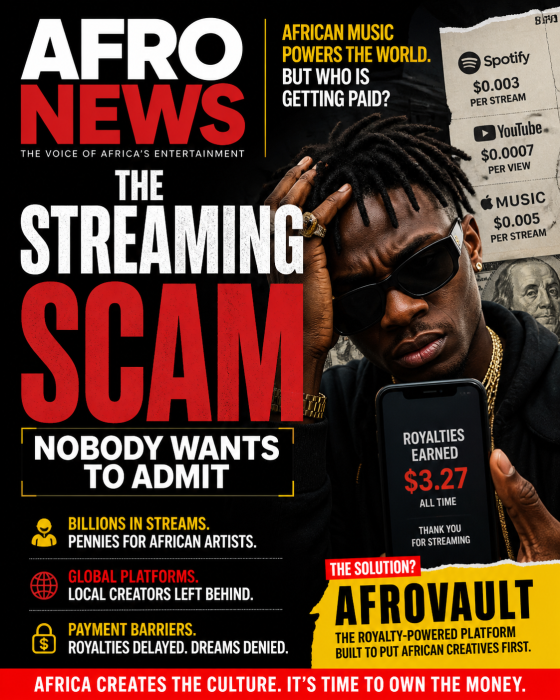
The Streaming Scam Nobody Wants to Admit

We were told streaming would democratize music.

Upload your song. Reach the world. Get paid.

But the numbers don’t lie.

  • Spotify pays roughly $0.003 – $0.005 per stream
  • That means 1 million streams = about $3,000 – $5,000 (before splits)
  • YouTube averages even less — often $1,000 – $2,000 per million views

Now break that down:

  • Distributor takes a cut
  • Label takes a cut
  • Publisher takes a cut
  • Management takes a cut

By the time it reaches the artist — especially an African independent artist — the earnings are often shockingly small.

And here’s the real issue:

👉 Those payouts are already low globally — but African artists face additional barriers collecting them fully.

The Real Lockout: Payment Infrastructure

This is where it gets uncomfortable.

Even when African artists generate revenue, getting paid efficiently is a problem.

Why?

Because the global financial system they depend on is not built for them.

  • Google Pay — limited functionality across Africa
  • Apple Pay — not widely supported across African markets
  • Cross-border payments — slow, expensive, fragmented
  • Banking systems — inconsistent and often incompatible

So what happens?

👉 Money is generated globally
👉 Processed globally
👉 But struggles to land properly in African hands

That is not a coincidence. That is a structural choke point.

Sign Away Your Rights — Or Stay Broke

Let’s be brutally honest.

If an African artist wants to fully maximize their earnings, they are often pushed into one direction:


Sign with a Western company.

Because those companies:

  • Control publishing pipelines
  • Have access to royalty systems
  • Operate within supported payment networks
  • Collect what African systems cannot

So the “opportunity” becomes a trade-off:

👉 Ownership vs Access
👉 Independence vs Income

That is not empowerment.
That is modern-day gatekeeping.

Convenient System — Predictable Outcome

Is this deliberate?

Maybe not in the way people imagine.

But it is definitely convenient for those already in control.

Because the current system allows:

  • African creativity to scale globally
  • Revenue to accumulate externally
  • Financial control to remain outside Africa

And as long as that structure exists, the outcome remains predictable:

Africa exports culture — but imports its own money.

The Hidden Cost of Global Success

We celebrate chart positions.
We celebrate sold-out shows.
We celebrate international collaborations.

But behind the scenes:

  • Royalties go uncollected
  • Payments are delayed
  • Data is incomplete
  • Artists are underpaid

And somehow, the narrative remains:
“Africa is winning.”

Winning what exactly?

Control the System — Or Stay in the System

Here’s the truth nobody can avoid:

If you don’t control the infrastructure, you don’t control the outcome.

And right now, Africa controls very little of the financial pipeline that powers its music.

That is why initiatives like AfroVault, being developed by RKMG Publishing, are not optional — they are necessary.

The goal is simple:

  • Own the royalty flow
  • Control the payment layer
  • Build a creator-first financial system
  • Eliminate dependency on foreign intermediaries

Because until Africa controls how money moves, it will never fully benefit from what it creates.


Final Word: This Is Not a Music Problem — It’s a Power Problem

African music is not lacking talent.
It is not lacking audience.
It is not lacking influence.

It is lacking control over money.

And until that changes:

  • The streams will rise
  • The headlines will grow
  • The culture will spread

But the wealth?

That will continue to leak.

The question is no longer whether Africa can dominate the global music industry.

It already does.

The real question is: when will Africa own it?

Facebook
Twitter
LinkedIn

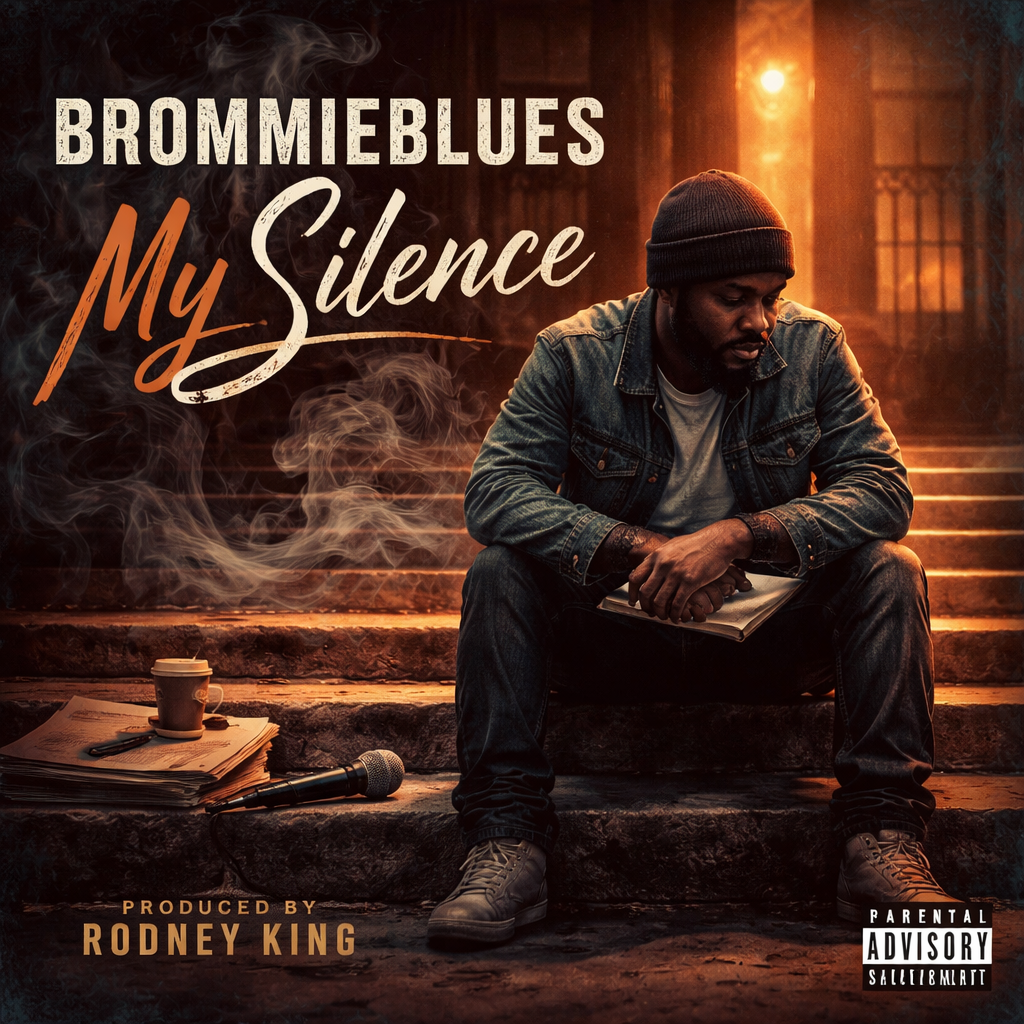
My Silence

🔓 Buy & Play – My Silence (£2.99) My Silence – Lyrics Artist: BrommiebluesProduced by: Rodney KingWritten by : Rodney King [Intro] “I Could Have Killed

Read More »
May 15, 2026 UK Artist Brommieblues Turns Personal Struggle into Powerful Spoken-Word Release “My Silence”

UK Artist Brommieblues Turns Personal Struggle into Powerful Spoken-Word Release “My Silence”

UK Artist Brommieblues Turns Personal Struggle into Powerful Spoken-Word Release “My Silence”

In an era where music often chases trends, UK-based spoken-word artist Brommieblues is doing something different—turning lived experience into raw, unfiltered storytelling.

His latest single, “My Silence,” produced by Rodney King, is not just a track—it is a deeply personal testimony. Blending spoken word, hip-hop, and urban blues, the piece delivers a powerful narrative centred on fatherhood, identity, and the emotional weight of navigating institutional systems.

At the heart of the song is a striking and provocative line:
“I could have killed this judge.”

Yet, rather than promoting violence, the lyric operates as a metaphor—capturing the intensity of suppressed truth and the frustration of being unheard in spaces where decisions carry life-changing consequences.


A Voice for the Unheard

“My Silence” stands out for its stripped-back production and cinematic tone. The minimal instrumentation allows Brommieblues’ voice to take centre stage, drawing listeners into a deeply reflective and often uncomfortable space.

Through vivid imagery, the artist paints a picture of standing alone—representing himself, unheard, and reduced to paperwork within a system that struggles to acknowledge the human reality behind legal language.

Phrases like “best interests” are challenged and re-examined, not as neutral terms, but as concepts that can feel disconnected from lived experience.

Fatherhood at the Core

What gives the track its emotional weight is its grounding in fatherhood. Beyond the courtroom setting, “My Silence” is ultimately about the bond between a father and his child—one that exists beyond documents, decisions, and distance.

The song’s closing message, “Still his father,” serves as a powerful affirmation of identity, resilience, and unconditional love.

It is this combination of vulnerability and strength that makes the track resonate far beyond its immediate story.


Music as Testimony

With “My Silence,” Brommieblues joins a growing wave of artists using music as a platform for social reflection and personal truth. The project sits at the intersection of spoken-word poetry and urban blues, offering a format that feels both intimate and cinematic.

Producer Rodney King’s understated approach complements the narrative, allowing space for silence, pauses, and emotional delivery to carry as much weight as the lyrics themselves.


A Cultural Conversation

At a time when conversations around identity, justice, and representation continue to evolve, “My Silence” contributes a perspective that is rarely heard in mainstream music.

It is not framed as protest, nor purely as art—but as something in between: a lived account transformed into sound.


Now Available

“My Silence” by Brommieblues is now available on all major streaming platforms, including Spotify and Apple Music.

More than just a release, “My Silence” is a statement—one that challenges listeners to reflect, to feel, and to consider the stories that often remain unheard.

Facebook
Twitter
LinkedIn

My Silence

🔓 Buy & Play – My Silence (£2.99) My Silence – Lyrics Artist: BrommiebluesProduced by: Rodney KingWritten by : Rodney King [Intro] “I Could Have Killed

Read More »